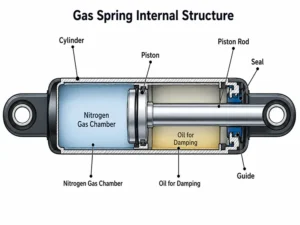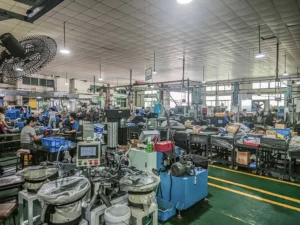
Gas springs are essential in automotive, industrial, medical, and furniture applications. Choosing the right gas spring ensures smooth motion gas springs, reliability, and long-term durability. This guide includes technical insights, calculation methods, material considerations, and diagrams to help you select the ideal industrial gas springs or custom gas springs from Tieying Gas Springs Factory.
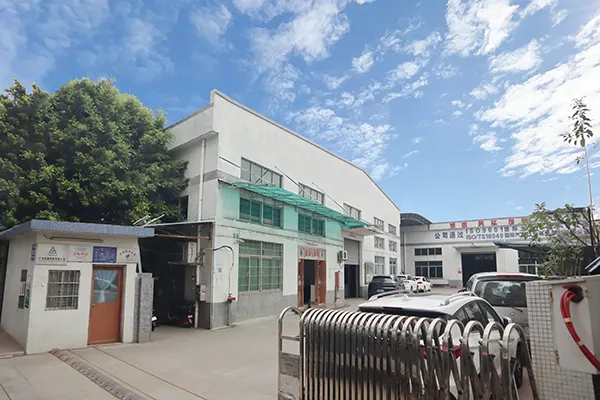
Understanding Gas Springs
A gas spring uses compressed nitrogen inside a sealed cylinder to provide a consistent force. It can function as a push gas spring, pull gas spring, or damped gas spring for controlled motion springs applications. Engineers must consider piston design, seal type, and gas pressure to achieve precise motion.
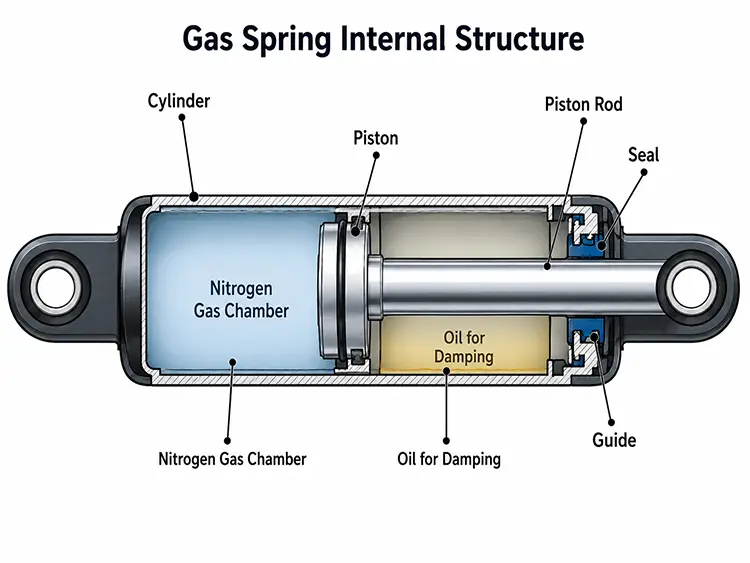
Gas spring internal structure showing cylinder, piston, rod, and gas chamber.
Key Factors for Selecting the Right Gas Spring
1. Gas Spring Force and Load
The required gas spring force depends on the weight, leverage, and motion angle. For push or pull applications, engineers use:
F = (W × L1) / L2
Where F = gas spring force, W = load weight, L1 = distance from pivot to center of gravity, L2 = distance from pivot to spring attachment.
Adjustable gas springs or custom force gas springs allow fine-tuning to compensate for friction or dynamic loads, preventing uncontrolled motion.
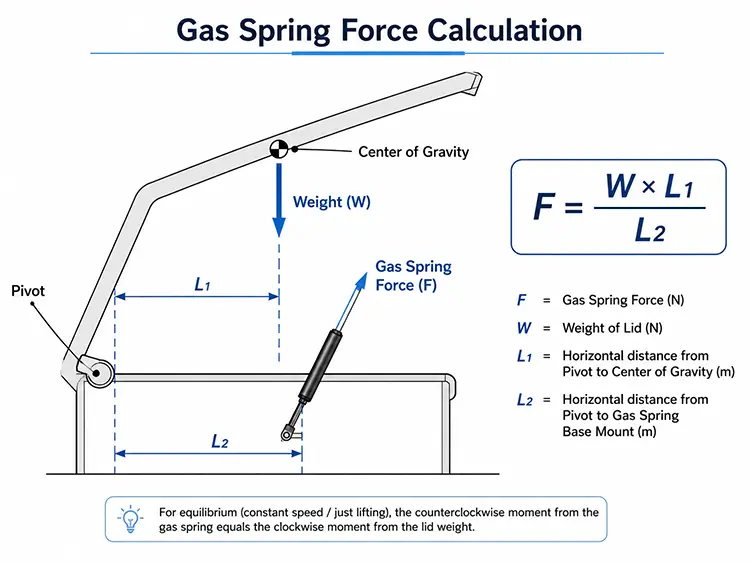
Force calculation for a trunk lid using push gas springs.
2. Gas Spring Stroke Length
The gas spring stroke length must match the required motion. Stroke too short may limit movement; stroke too long may stress mounts. Custom stroke gas springs and adjustable gas springs allow exact motion control.
3. Materials and Durability
Material choice affects lifespan and corrosion resistance. Stainless steel or corrosion-resistant gas springs are ideal for humid environments. Tieying gas springs factory provides high-quality gas springs with chrome-plated rods and durable seals for long-term performance.
| Material | Environment | Advantages |
|---|---|---|
| Stainless Steel | Outdoor, humid, chemical exposure | Corrosion-resistant, durable, low maintenance |
| Carbon Steel | Indoor industrial | Cost-effective, high load capacity |
| Chrome-Plated Rods | All | Reduced friction, longer seal life |
4. Mounting and End Fittings
Proper gas spring mounting and industrial gas spring fittings prevent misalignment, uneven wear, and seal failure. Common end fittings include ball sockets, eyelets, and threaded studs. Tieying custom gas springs offer solutions for precise mounting in industrial machinery and automotive components.
5. Damping and Controlled Motion
Applications needing smooth motion require damped gas springs or controlled motion springs. Internal valves regulate speed during extension or compression, preventing sudden slamming. This reduces wear and improves operator safety.
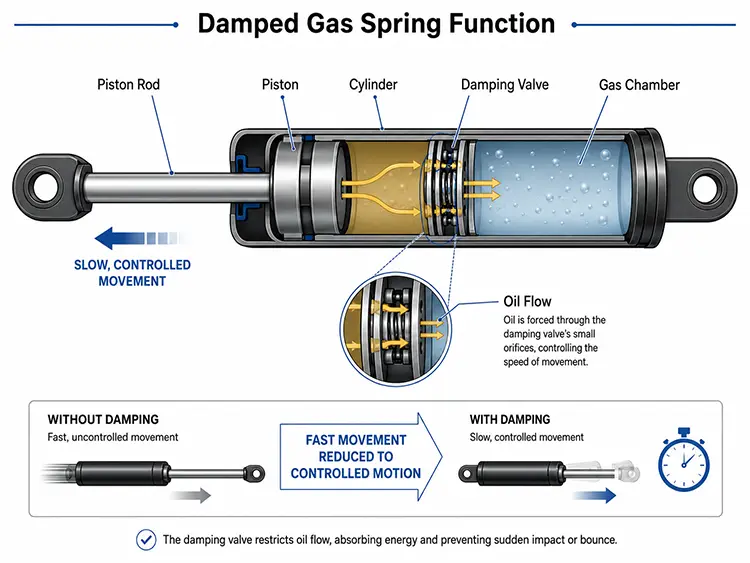
Damping mechanism slows gas spring movement for controlled motion.
6. Customization Options
For unique industrial or ergonomic applications, adjustable gas springs, custom stroke gas springs, and custom force gas springs allow precise specification of force, stroke, and mounting. Tieying gas spring customization ensures smooth operation and long-term reliability.
7. Safety Considerations
Always choose safe gas springs or industrial safety springs that meet pressure and cycle life standards. Tieying gas springs safety testing ensures leak-free operation and protects both machinery and operators in high-demand environments.
Conclusion
Selecting the right gas spring involves balancing force, stroke length, materials, damping, and mounting. Accurate load calculation and understanding the gas spring application ensure the proper choice of industrial gas springs, custom gas springs, or high-quality gas springs. Partnering with Tieying Gas Springs Factory guarantees access to tailored custom gas spring solutions, smooth motion gas springs, and reliable performance for any industrial or specialized application.