Trailer Gas Struts
Factory-Direct OEM Gas Struts for Trailers, Campers & RVs — Custom Force, Length & Fittings
TieYing engineers and manufactures nitrogen gas struts for the full range of trailer applications — storage compartment doors, concession serving windows, rear kitchen hatches, pop-top roofs, bed lifts, and toy hauler ramp doors. Every strut is built to withstand road vibration, wide temperature ranges, and long-term outdoor exposure.
What Are Trailer Gas Struts?
Trailer gas struts (also called trailer gas springs or lift supports) are sealed nitrogen-filled cylinders that provide controlled lifting, lowering, and holding force for hatches, doors, lids, and panels on towed trailers and recreational vehicles.
A gas strut counterbalances the weight of the moving panel so that it opens with minimal manual effort, stays securely in the open position, and closes smoothly without slamming. Unlike fixed mechanical props or manual lift arms, a properly sized gas strut operates through the entire range of motion and eliminates the need for loose support poles.
TieYing trailer struts are specifically engineered for mobile operating conditions — continuous road vibration, UV exposure, moisture, dust, and temperature cycling — rather than stationary furniture use.
Why Incorrect Strut Selection Causes Problems?
Selecting the correct gas strut for a trailer application requires more than matching the physical length. Using an undersized, oversized, or generic off-the-shelf strut leads to predictable failures.
Undersized Struts
When the force rating is too low, the strut cannot hold the lid open. Common symptoms include:
- The lid sagging or dropping under its own weight
- The panel closing unexpectedly on a slight incline or in wind
- Increased manual force required to lift the lid
- Premature internal wear as the gas charge works beyond its intended load
Oversized Struts
Excessive force is equally problematic and creates a safety hazard:
- The lid launching upward when released, potentially causing impact injury
- Difficulty closing the panel against high gas pressure
- Stress on hinges, mounting screws, and thin aluminum or fiberglass panels
- Long-term deformation of the lid frame
Generic Struts Not Designed for Trailer Use
Standard furniture or cabinet struts fail quickly on trailers because they are not engineered for vibration and wide temperature ranges. Their seals harden or soften with temperature changes, the gas charge leaks under road vibration, and the piston rod surface pits from road spray and moisture.
How Trailer Gas Struts Work?
Each TieYing gas strut consists of a precision steel cylinder, a piston rod with a flow-control valve, and a multi-lip seal assembly. The cylinder is charged with 99.99% pure nitrogen at a regulated pressure.
Opening
When the latch is released, the nitrogen pressure pushes the piston rod outward. The extending rod applies force to the lid, assisting the user’s lifting effort. The force is highest when the strut is near the compressed position and gradually decreases as the rod extends.
Holding
At any intermediate position, the gas pressure balances the weight of the panel. The lid remains stable without requiring a separate prop or lock. In paired installations, two struts distribute the load evenly and prevent the lid from twisting.
Closing
The user applies downward force to overcome the gas pressure. Internal hydraulic damping controls the closing speed, particularly near the end of the stroke, so the lid seats softly rather than slamming against the frame.
Trailer-Grade vs. Standard Furniture Struts
| Feature | Trailer-Grade Gas Struts | Standard Furniture Struts |
|---|---|---|
| Seal design | Multi-lip nitrile with wear ring | Single lip |
| Operating temperature | -30°C to +80°C | -10°C to +60°C |
| Vibration resistance | Engineered for continuous road vibration | Not rated |
| Rod surface | Hard chrome, 0.05 mm thickness | Thin chrome plating |
| Salt spray resistance | 48–96 hours depending on finish | 12–24 hours |
| Cycle life | 150,000+ cycles | 20,000–50,000 cycles |
| Damping | Progressive end-of-stroke damping | Minimal or none |
Trailer Gas Strut Applications
1. Storage Compartment Doors
Travel trailers, fifth wheels, and cargo trailers typically have multiple exterior storage bays — side pantries, generator bays, battery boxes, and under-floor storage. These doors are hinged at the top or side and weigh between 10 and 30 lbs (4.5–13.6 kg).
Typical specification range:
| Parameter | Range |
|---|---|
| Extended length | 12" – 20" (300–500 mm) |
| Force per strut | 20 lbs – 60 lbs (90–270 N) |
| Rod / tube diameter | 8 mm / 18 mm |
| End fittings | Ball socket or eyelet |
| Installation | Single or paired depending on door width |
2. Concession Trailer Serving Windows
Concession and food trailers use large upward-flipping serving windows. The window lid opens like an awning over the service counter and is held open by two struts mounted inside the window frame.
Typical specification range:
| Parameter | Range |
|---|---|
| Extended length | 16" – 26" (400–650 mm) |
| Force per strut | 40 lbs – 120 lbs (178–534 N) |
| Rod / tube diameter | 10 mm / 22 mm |
| End fittings | Ball socket |
| Installation | Paired, one on each side of the window |
3. Teardrop and Camper Trailer Rear Kitchen Hatches
Teardrop campers and hybrid campers use large rear galley hatches that lift upward to expose the outdoor kitchen. These insulated lids are often 24–48 inches wide and weigh 25–60 lbs (11–27 kg).
Typical specification range:
| Parameter | Range |
|---|---|
| Extended length | 20" – 32" (500–800 mm) |
| Force per strut | 30 lbs – 100 lbs (133–445 N) |
| Rod / tube diameter | 10 mm / 22 mm or 14 mm / 28 mm |
| Damping | Required to prevent rapid opening |
| Installation | Paired, symmetric on both sides |
4. Pop-Top Roof Lifts
Pop-top campers and caravans raise the roof vertically to create interior headroom. The roof assembly requires four matching long-stroke struts to lift evenly at all corners.
Typical specification range:
| Parameter | Range |
|---|---|
| Extended length | 24" – 40" (600–1000 mm) |
| Stroke | 12" – 20" (300–500 mm) |
| Force per strut | 60 lbs – 150 lbs (270–667 N) |
| Rod / tube diameter | 14 mm / 28 mm |
| Installation | Four struts, one per corner |
5. Toy Hauler Ramp and Cargo Doors
Toy haulers and equipment trailers use large rear ramp doors that can weigh 100–300 lbs (45–136 kg). High-force struts assist the lifting effort and control the descent.
Typical specification range:
| Parameter | Range |
|---|---|
| Extended length | 30" – 60" (750–1500 mm) |
| Force per strut | 150 lbs – 500 lbs (667–2225 N) |
| Rod / tube diameter | 14 mm / 28 mm or 18 mm / 40 mm |
| End fittings | Heavy-duty eyelet or ball joint |
| Installation | Paired or with additional lift springs |
6. Trailer Bed Lifts and Platforms
Gas struts support lift-up beds and elevating platforms in toy haulers and custom cargo trailers, creating storage space below the platform.
Typical specification range:
| Parameter | Range |
|---|---|
| Extended length | 16" – 30" (400–750 mm) |
| Force per strut | 50 lbs – 200 lbs (222–890 N) |
| Installation | Multiple struts distributed across the platform |
| Options | Locking gas struts for fixed positioning |
7. Horse and Livestock Trailer Doors
Horse trailers have side ramp doors, butt doors, and rear gates exposed to dust, ammonia, and moisture. Corrosion-resistant struts are recommended.
Typical specification range:
| Parameter | Range |
|---|---|
| Force per strut | 40 lbs – 120 lbs (178–534 N) |
| Material | 304 stainless steel or coated steel |
| End fittings | Stainless eyelet or ball socket |
8. Marine and Boat Trailers
Boat trailers operate in constant saltwater spray. Fully stainless steel 316 struts are available for coastal and marine environments.
Trailer Gas Struts Technical Specifications
The following table covers the standard specification range for TieYing trailer gas struts. All parameters can be customized.
| Parameter | Standard Range |
|---|---|
| Force rating | 20 N – 2500 N (4.5 – 562 lbs) |
| Extended length (center-to-center) | 150 mm – 1500 mm (6" – 60") |
| Compressed length | 80 mm – 750 mm |
| Stroke length | 50 mm – 700 mm (2" – 28") |
| Rod diameter | 6 mm, 8 mm, 10 mm, 14 mm |
| Tube diameter | 15 mm, 18 mm, 22 mm, 28 mm, 40 mm |
| Working temperature | -30°C to +80°C (-22°F to +176°F) |
| Cycle life | 80,000 – 200,000 cycles |
| Gas type | 99.99% pure nitrogen |
| Rod finish | Hard chrome plated |
| Tube finish | Black electrophoretic, zinc plated, 304 SS, 316 SS |
| End fittings | Ball socket, eyelet, stud, fork, custom brackets |
| Damping options | Standard, progressive, soft close |
How to Select the Correct Gas Strut?
Force Calculation
For a horizontally hinged lid opening upward, the required force per strut is calculated using torque equilibrium around the hinge:Force per Strut (N) = (Lid Weight in N × Distance from Hinge to Center of Gravity) ÷ (Number of Struts × Distance from Hinge to Strut Mount)
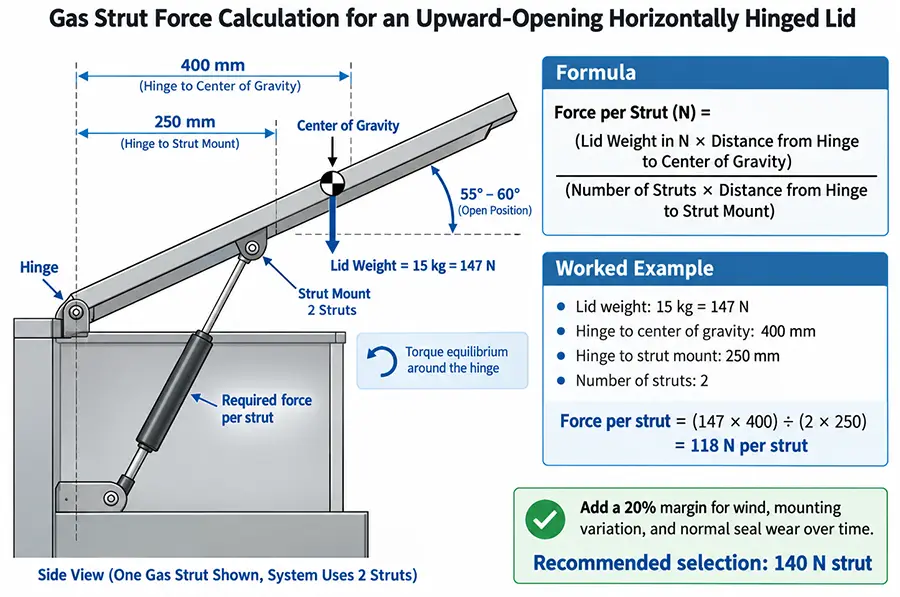 Worked example:
- Lid weight: 15 kg = 147 N
- Hinge to center of gravity: 400 mm
- Hinge to strut mount: 250 mm
- Number of struts: 2
Force per strut = (147 × 400) ÷ (2 × 250) = 118 N per strutAdd a 20% margin for wind, mounting variation, and normal seal wear over time. In this example, select a 140 N strut.
Mounting Orientation
- Mount the strut with the piston rod pointing downward when the lid is closed. This keeps the internal seal lubricated by the hydraulic oil.
- Keep the strut aligned within 2 degrees of the mounting axis to avoid side-loading the rod.
- Attach both ends to reinforced structural points rather than thin sheet metal.
- Do not use the strut at its absolute mechanical limit — leave a small margin at both fully open and fully closed positions.
Paired Installation
For lids wider than 24 inches, always use two struts — one on each side. When replacing a failed strut on a paired installation, replace both units to maintain balanced force and prevent the lid from twisting.Replacing Existing Struts
If you are replacing an existing strut, measure the center-to-center extended length and the compressed length, and note the force rating printed on the tube. Send these values along with the end fitting type and we will match the specification.TieYing Manufacturing Advantages
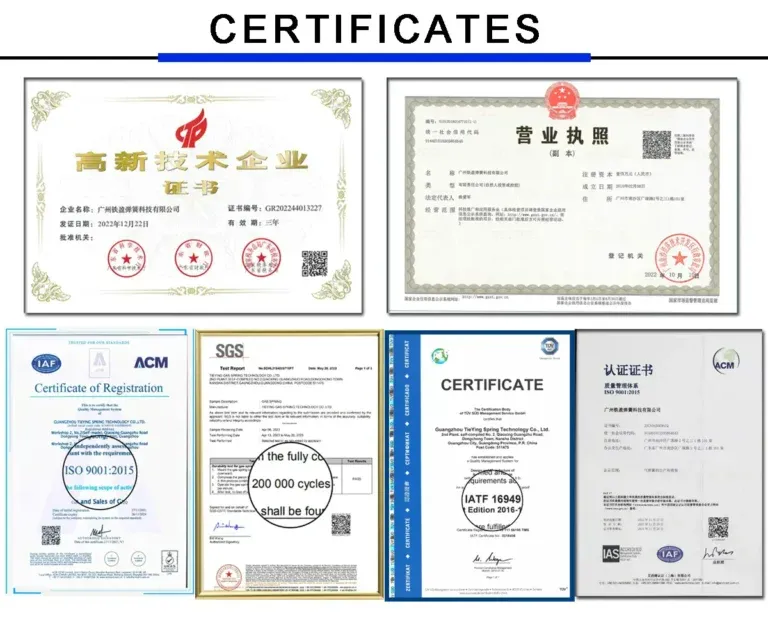
IATF 16949 and ISO 9001 Certified
TieYing operates under automotive-grade quality management systems. Every production batch follows documented processes from raw material inspection through final testing.
100% Testing Before Shipment
Each strut undergoes force testing, leak testing, and visual inspection before packing. No batch is shipped without complete verification.
Custom Engineering Support
Our engineering team works from drawings, samples, or application data. We recommend force, length, stroke, mounting geometry, and material based on the specific trailer design.
Flexible Order Quantities
| Order Type | Quantity |
|---|---|
| Samples and prototypes | 1 – 20 pieces |
| Small batch and custom builds | 100 pieces per model |
| OEM production | 500+ pieces |
Material Options
- Carbon steel with black electrophoretic coating — standard trailer use
- Zinc plated steel — improved corrosion resistance
- 304 stainless steel — coastal and humid environments
- 316 stainless steel — direct marine and saltwater exposure
Private Label and Custom Packaging
For distributors and trailer brands, TieYing provides custom labels, retail packaging, branded instruction sheets, and neutral product marking.
Lead Time
| Production Type | Lead Time |
|---|---|
| Standard catalog models | 7 – 15 days |
| Custom prototypes | 15 – 25 days |
| Bulk OEM production | 30 – 45 days |
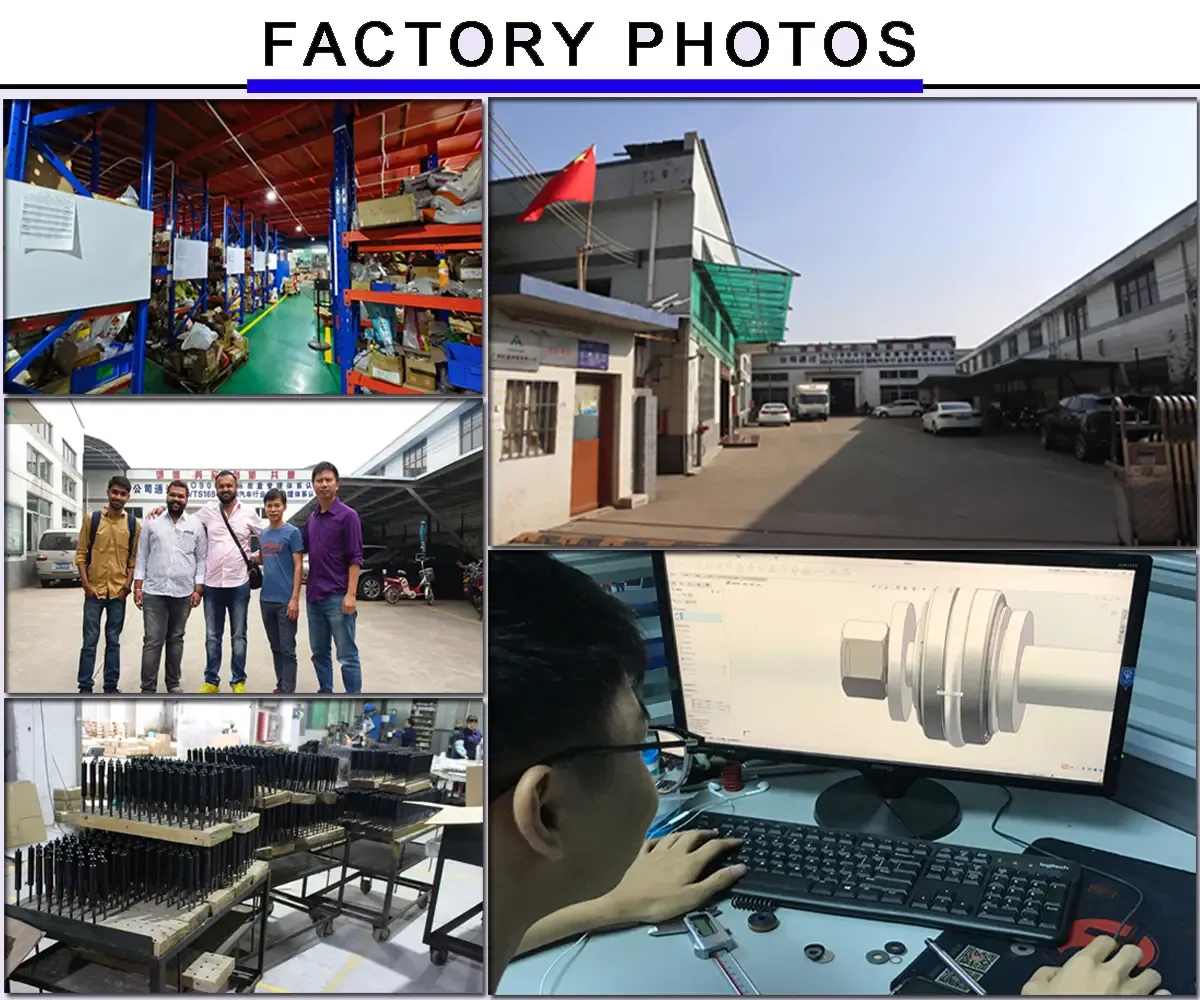
TieYing Factory Photos Show
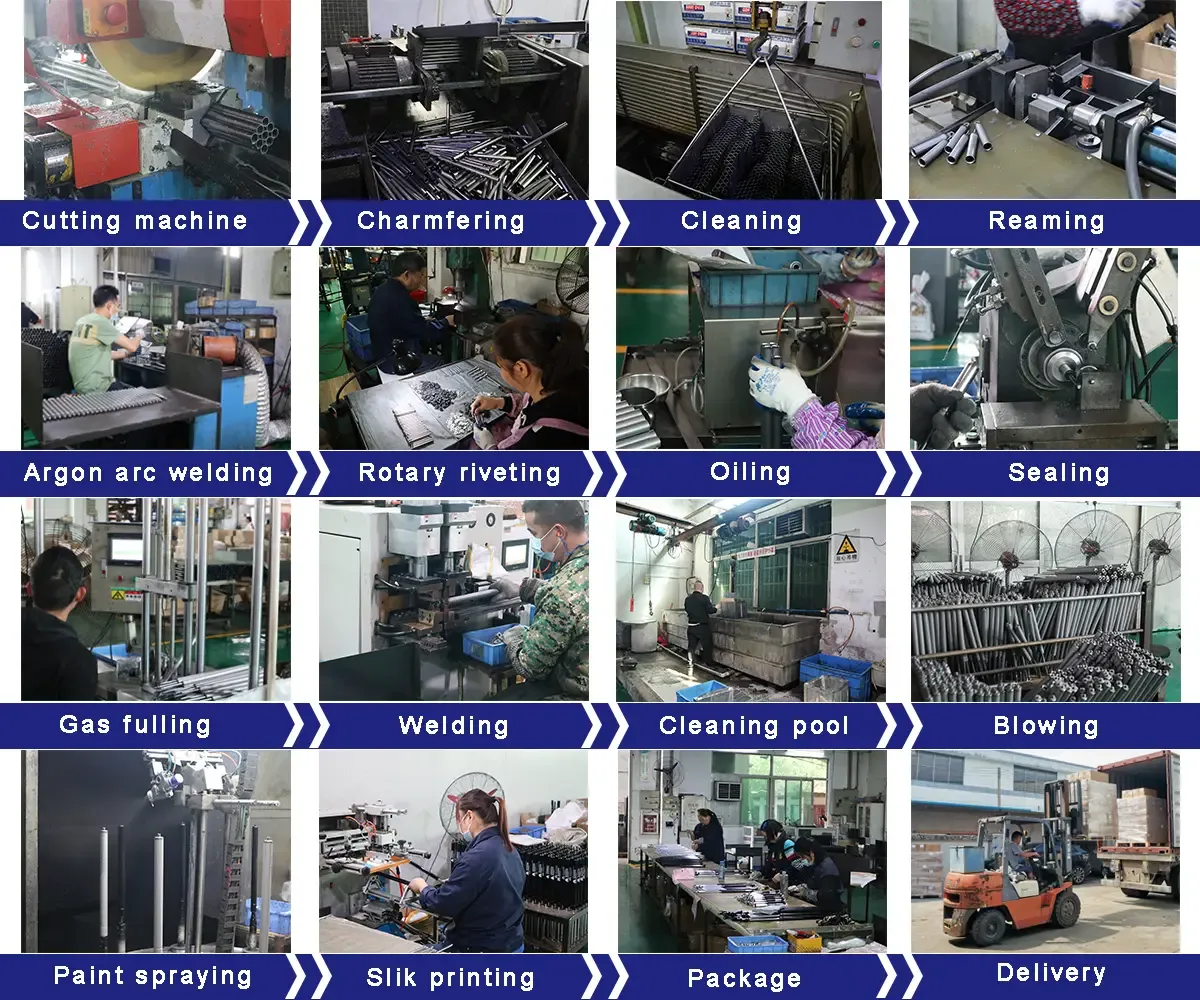
TieYing Factory Gas Springs Production Flow

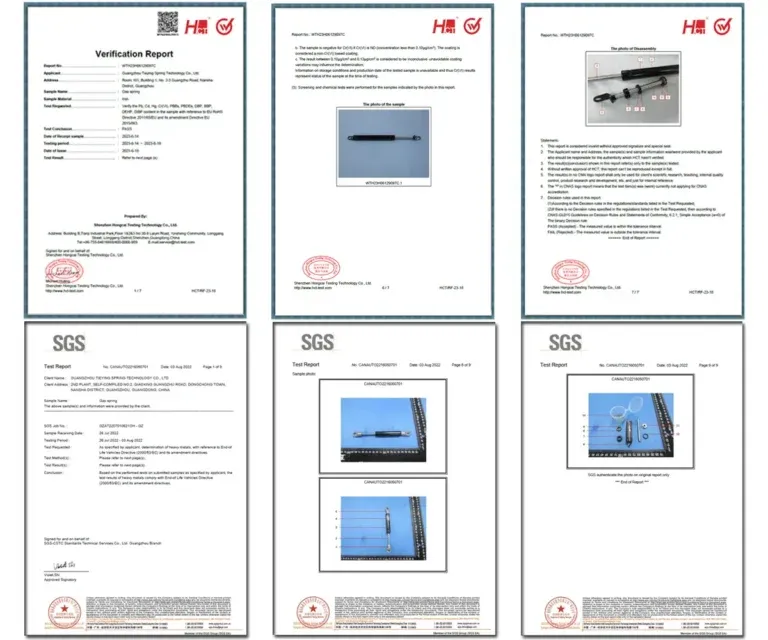
TieYing Factory Certifications & Quality Assurance
Factory Management System Certifications:
ISO 9001 – Quality Management System;IATF 16949 – Automotive Quality Management System
Product Testing & Compliance:
SGS – 200,000-Cycle Durability Test;RoHS – Restriction of Hazardous Substances
TieYing Factory Video Verified by SGS
Competitive Advantages of TieYing Gas Springs
| Item | TieYing Gas Springs | Standard Gas Springs (Other Supplier) |
|---|---|---|
| Certificate | SGS 200000 Cycles Durability Test, ROHS, T16949, IS09001 | Maybe just ISO9001 |
| Material | Top seamless steel (Full inspection by Professional testing equipment) | Maybe steel |
| Oil | Anti-wear hydraulic oil from Garmany | Maybe Semi-Synthetic |
| Piston Roughness | Up to Ra 0.696um | Maybe Ra 0.4um |
| Gas spring resistance | 100°C~-40°C | Maybe 60°C |
| Gas | 99.99% nitrogen | Maybe oxygen / Impure nitrogen |
| Uselife | 80,000-200,000 cycles with SGS test report | Maybe 50,000 cycles |
| Salt spray testing | Up to 96 hours | Maybe up to 12 hours |
| Inspection | All procedure sampling inspect, complete inspect before delivery | Maybe sampling inspection |
| Defective product | Re-produce new, If reach 10%, 100% items re-produce new | Maybe Repair |
Frequently Asked Questions (FAQ)
What force rating do I need for a trailer compartment door?
The required force depends on the lid weight, the position of the center of gravity, and the strut mounting distance. Use the force calculation formula above, or send us your lid weight and dimensions and we will calculate the correct rating.
Can I use a single strut on a wide compartment door?
Single struts are suitable for narrow doors. For lids wider than 24 inches, two struts are recommended to distribute the load and prevent the lid from twisting.
How long do trailer gas struts last?
TieYing trailer struts are rated for 150,000 or more cycles. Under normal seasonal trailer use, this corresponds to approximately 8–12 years of service.
What is the difference between steel and stainless steel struts?
Standard steel struts with black or zinc coating are suitable for general trailer use. 304 stainless steel is recommended for coastal and high-humidity environments, and 316 stainless steel is used for direct saltwater and marine exposure.
Can you match an existing strut specification?
Yes. Provide the extended length, compressed length, force rating, and end fitting type from the original strut and we will manufacture a matching unit.
Do you offer locking gas struts?
Yes. Locking gas struts that hold a fixed position are available for bed lifts, adjustable panels, and applications requiring positive position locking.
What end fittings are available?
We offer ball sockets, eyelets, threaded studs, fork joints, and custom mounting brackets. The fitting type is selected based on the trailer structure and installation method.
What is the minimum order quantity?
For standard sizes, MOQ = 100 pcs. For fully customized dimensions, MOQ can be discussed (as low as 100 pcs for first trial). Sample orders (1–20 pcs) are welcome for validation.
How do I install replacement gas struts?
Most struts use ball studs or pin mounts already installed on the trailer. Press the ball socket onto the stud until it locks into place. We provide installation guides for custom and OEM orders.
Can you produce custom lengths and forces?
Yes. Every parameter including force, length, stroke, rod and tube diameter, end fittings, and finish can be customized to the application.
Looking for a Trailer Gas Strut Manufacturer?
TieYing supplies custom gas struts for trailer builders, RV manufacturers, concession trailer operators, and distributors worldwide. Send us your application requirements, drawings, or a sample strut and our engineering team will recommend the correct specification.